
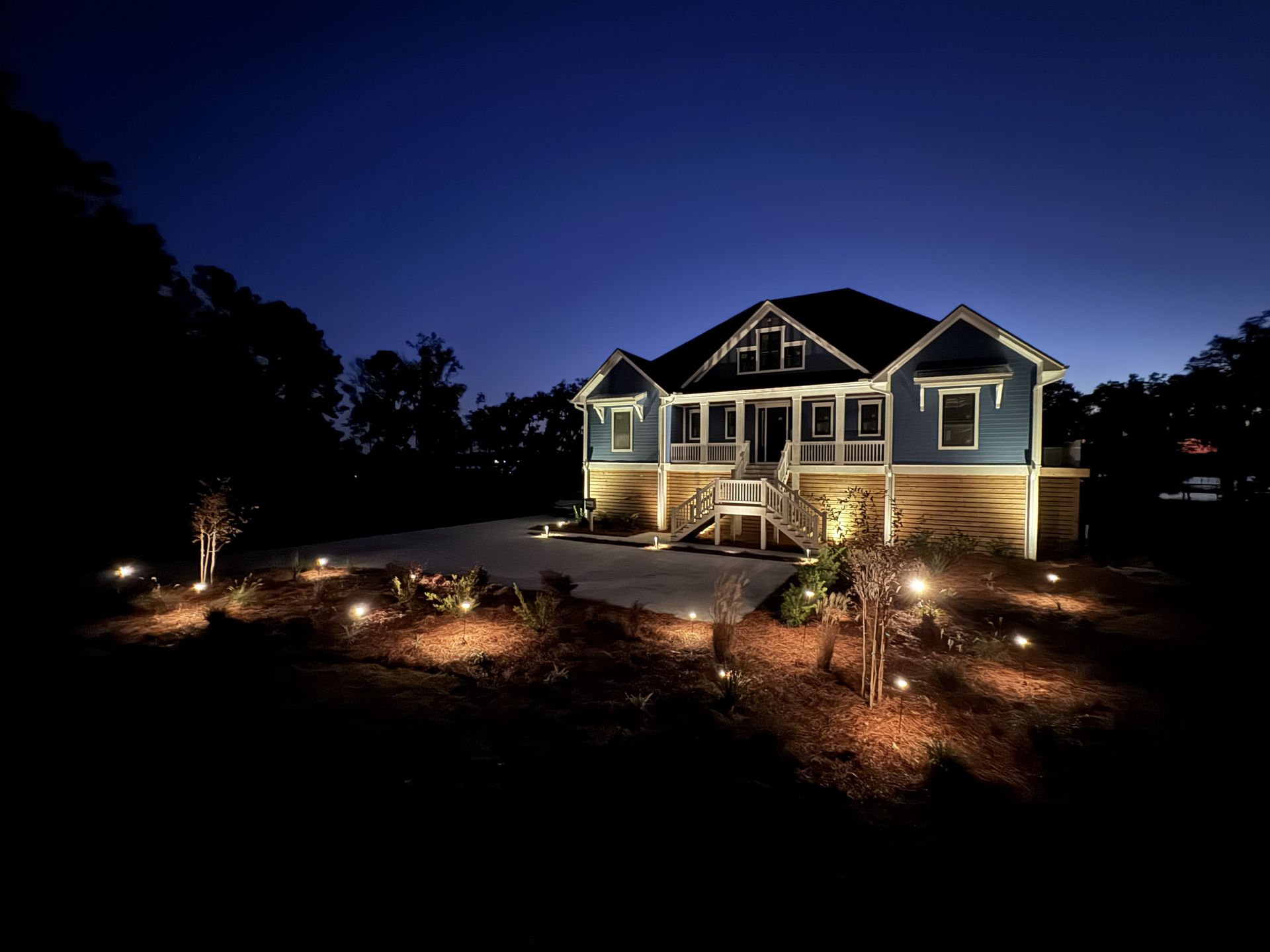
Light Your Property After Dark
Landscape Lighting in Beaufort, South Carolina and Surrounding Areas for Properties That Disappear at Night
Tideland Outdoors installs landscape lighting systems designed for residential properties in South Carolina's Lowcountry where outdoor spaces go unused after sunset and walkways become difficult to navigate safely. You may have invested in mature plantings, stone pathways, or a patio that guests never see once daylight fades. Professional lighting changes that by placing fixtures at ground level along paths, upward beneath tree canopies, and beside architectural features so your property remains visible and functional well into the evening.
The installation process involves running low-voltage wiring through planting beds and under mulch, positioning fixtures to avoid glare while directing light where it adds clarity or interest, and selecting weather-resistant housings built to handle South Carolina's humidity, salt air, and heavy summer storms. Tideland Outdoors uses systems rated for coastal conditions, with corrosion-resistant finishes and sealed connections that reduce the likelihood of water intrusion or fixture failure during prolonged rain events.
Schedule a landscape lighting consultation in Beaufort, Hilton Head, Bluffton, or a surrounding area to review fixture placement and discuss how a tailored lighting plan can make your outdoor areas safer and more inviting after dark.
Where Fixtures Go and What They Illuminate
You start by identifying which features need visibility and which areas present tripping hazards or unclear boundaries once natural light is gone. Tideland Outdoors places path lights along walkways to mark edges and grade changes, positions spotlights at the base of specimen trees to cast light upward through branches, and mounts downlights beneath eaves or pergolas to illuminate patios without washing out conversation areas with harsh overhead glare. Fixtures are spaced to prevent dark gaps while avoiding over-illumination that flattens texture and creates discomfort for anyone standing nearby.
After installation, you will notice that steps become easier to see, garden beds gain depth and dimension at night, and the driveway entrance is clearly defined for visitors arriving after sunset. The light itself stays soft and directional, guiding movement without spilling onto neighboring properties or attracting excessive insect activity around fixtures.
The wiring runs on a transformer that steps household voltage down to twelve volts, reducing shock risk and allowing for flexible fixture placement without the permit requirements or safety concerns tied to line-voltage systems. Timers or photocell sensors automate operation so lights turn on at dusk and off at a set hour, and individual fixture heads can be adjusted or relocated as plantings mature or hardscape layouts change over time.
Homeowners often ask about fixture durability, power consumption, and how lighting integrates with existing landscaping without requiring major excavation or replanting.
Common Questions About Landscape Lighting Installation
What types of fixtures are used in a residential landscape lighting system?
You will typically see path lights with hooded tops to direct light downward, bullet-style spotlights for uplighting trees or walls, and well lights recessed into hardscape for grazing stone or siding. Tideland Outdoors selects fixtures with sealed gaskets and powder-coated or brass housings that resist corrosion in humid coastal conditions.
How much energy does a landscape lighting system use?
Low-voltage LED systems draw minimal wattage per fixture, often totaling less than the equivalent of a few standard household bulbs when the entire system is running. You control operating hours with a timer, so the system only runs during the hours you choose.
When should landscape lighting be installed relative to other outdoor projects?
Installation works best after hardscaping and major planting are complete, allowing the lighting designer to see final grades, plant locations, and architectural features that will benefit from illumination. Wiring is then routed to avoid root zones and irrigation lines.
Why do some landscape lights fail or corrode quickly?
Fixtures not rated for outdoor use or installed without proper sealing around wire connections allow moisture to enter and corrode terminals or short out LED drivers. South Carolina's humidity and storm frequency make weather-tight connections and corrosion-resistant materials essential for long-term performance.
How does lighting placement avoid glare or light spill onto neighboring properties?
Fixtures are aimed to keep light below eye level or directed at specific surfaces rather than broadcasting in all directions. Tideland Outdoors tests angles during installation to confirm that beams stay within your property lines and do not create nuisance lighting for adjacent homes.
Request a project estimate if you are ready to add lighting to pathways, garden beds, or architectural features that currently disappear once the sun goes down. Tideland Outdoors will walk your property to discuss fixture types, placement, and system sizing before any installation begins.